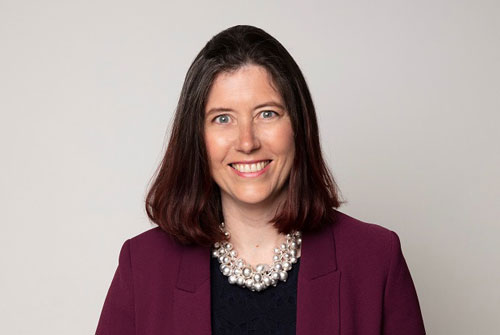
The UK Warehousing Association has a thousand member companies comprising 800 who are warehouse operators - both third party providers & logistics users - and 200 associates who provide services to the warehousing and logistics industry. Not so strongly represented are the own-account operators providing warehousing services for their own goods.
The four pillars of UKWA are to talk about warehousing - to potential employees as well as government - to raise industry standards, build a sense of community and help members to develop their businesses.
Formed in 1944 at a time when German bombers had attacked warehousing at our ports, UKWA therefore attained its 80th anniversary this year, prompting a high-profile campaign "2024 The Year of Warehousing", to highlight the critical role of warehousing in supply chains. And rather than incur the cost of rebranding a lorry, Clare decided to apply the branding to her car, in which she set off to visit 80 warehouses! UKWA has enjoyed widespread support, with its Honorary President Baroness McIntosh of Pickering sponsoring a reception at the House of Lords.
The functions of warehousing have evolved over the years, with simple storage of raw materials progressing to manufacturing, logistics, retail, consumer interface and waste management. Christmas gifts that arrive in plain cardboard packaging from China may now be gift-wrapped in the warehouse, while missing buttons may be sewn on and other repairs made to fashion items; warehouses also manage returns and recycling.
The UK's largest warehouse complex at Magna Park in Lutterworth with 16M square feet across 55 warehouses is symptomatic of the 1980s growth of the Golden Triangle of the English Midlands which was abetted by containerisation and led by Asda. Others including Iron Mountain and online US retailer Wayfair are now based there too.
All sectors of the market have shown growth since 2015, with online retail leading the way. The likes of Amazon are often tenants of developers like Mountpark or investors like Vestas and Savills who may sell on their interest. Issues include getting planning permission, providing for freight access, availability of labour and ensuring sufficient electric power, with old coalfield areas often favoured for their historical infrastructure provision - Barnsley has the largest proportion of warehousing jobs relative to total employment. Globally, about one quarter of warehouses are automated, with robots deployed to offset any labour shortage. Sectors like parcels and food are well suited to such automation, because of their scale.
85% of energy consumption in logistics goes on transport so that the main focus for decarbonisation is often on "modal shift": switching from say air freight to sea transport or using rail where this is practicable. However other activities too can produce savings such as technical improvements in temperature-control equipment (used in the 10% of warehouses for chilled or frozen goods). Use of LED lighting can yield benefits, and an increase in the proportion of only 5% of warehouse rooftops with solar panels could reduce the incursion of solar farms on agricultural land.
UKWA is providing assistance with the legal complexities of negotiating solar leases on rooftops of warehouses that may be leased by tenants. It is good to see port operators ABP and Peel rivalling each other to see who can accommodate more solar panels. Autonomous operation of warehousing software can yield sharing of data to improve the sector's contribution to economic growth. More than ever, the challenge for warehousing will come on two fronts: providing enough land through the planning system; and ensuring that policy around existing units facilitates upgrading to meet the goals of Environmental Social and Governance certification in the future.
Report by John Yellowlees.
The CILT Logo is a registered trademark of the Chartered Institute of Logistics and Transport
Unless otherwise stated, site and contents © John G. Fender 1997 - 2026. All rights reserved.
Site designed & maintained by John G. Fender, Bsc., FCILT