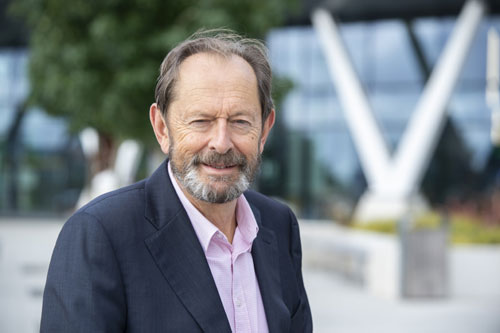
Anthony Smith retired in 2023 as Chief Executive of Transport Focus embracing rail, bus and highway sectors after a career that had begun with him joining the old Central Rail Consultative Committee in 1999.
Now busy with the Heathrow Area Transport Forum, the Independent Rail Retailers trade association and the National Transport and National Rail Awards, he can view consumer representation in the transport sector as starting with the perspective of the Consumers Association magazine Which? where the market kept highly-competitive price-sensitive industries on their toes. However something more was needed in dealing with transport providers whose main competitor was the private car.
As funding for public transport operators comes increasingly from central or local government with the private sector receding post-CoVid, so it seems right that funding for consumer representation should be provided by the state, ensuring credibility while also endorsing public aspirations. The need for a consumer body to match the might of the newly nationalised industries was recognised in the 1949 creation of the Central Transport Consultative Committee with its regional offshoots. Now we are heading into a climate crisis, and LTNs and ULEZ are portents of what is to come.
A myriad of local groups is needed to authenticate users' expectations, but without some sort of central forum to prioritise issues there is a risk of ending up with thousands of wish-lists. Research is required in order that anecdotes may give way to evidence-backed arguments, and Transport Focus has provided benchmarking against other countries. Last year's proposal from rail companies and government to close the great majority of ticket offices in England was a classic example of coming up with an answer without first asking the right questions, and Transport Focus had been absolutely right to fight it all the way.
The National Passenger Survey was a useful tool that lapsed with CoVid and is in need of revival. Great British Railways will have to devise a method of monitoring that is demonstrably independent if it is to continue the uniquely British legacy of developing customer satisfaction data for rail, bus and road users. There is however little doubt as to what users want - services that are safe, reliable, keep users informed during disruption and are provided by friendly staff for whom Awards can be a useful means of boosting morale. Anthony sees no point in polling non-users who might give what they thought was the right answer, eg saying that improved public transport would make them drive less, in the knowledge that this would never be tested.
The move twenty years ago to a central Passenger Focus organisation had to an extent been cost-driven, and while it gained by developing evidence-backed data there was no doubt that the ability had been lost to harness local knowledge. Devolution meant it was right that consumer representation should resemble a patchwork quilt of overlapping responsibilities, but there ought to be a national body for each nation. Expectations on safety differ greatly between the modes - whereas the Rail Accident Investigation Branch did a great job of enquiring into the causes of each mishap, National Highways was too content to lump them together as driver distraction.
Asked where he wished Transport Focus had done more, Anthony cited penalty fares and asked how in the recent Northern case the passenger could be expected to grasp the nuances of the rail industry definition of "anytime". LNER has been criticised for its recent fares simplification, but a start had to be made somewhere and one tended to hear more from those whose fares had gone up and less from others who had been able to avail themselves of a bargain. Split ticketing is further evidence of a structure that had grown too complicated and now needs single reservation arrangements to match availability of a through fare. On the roads more could have been done to enhance safety and about improving facilities on the motorways for truck drivers.
Indiscriminate use of Artificial Intelligence in handling customer correspondence could run the risk of alienating passengers wanting to offer feedback who might conclude that nobody cared.
The nature of consumer representation matches the character of the clientele. Rail users are predominantly middle-class, often resident around London and other big cities and shouted the loudest, so that an observer newly arrived from Mars might be forgiven for thinking that train was the dominant mode. Bus users are more scattered and less articulate, so deserve a louder voice which maybe the new mayors will give them. Everyone relies on the roads, the most classless mode, but except on issues like potholes road users do not usually see themselves as special-interest groups.
By placing the emphasis on speed, HS2 is the classic case of putting the answer before the question since had the industry been asked to come up with a solution that would move people sustainably and offer value for money, it might have come up with a very different scheme - as things have turned out we are getting against best practice a terminal station in Birmingham, no freight provision and no link to HS1. If GBR is to embody best practice, it might have to look to the likes of booking.com so as to develop wider packages of travel plus accommodation plus entertainment as funding support declines from the public purse. There is a need to spread the resources for consumer representation from rail across the other modes.
Report by John Yellowlees.
The CILT Logo is a registered trademark of the Chartered Institute of Logistics and Transport
Unless otherwise stated, site and contents © John G. Fender 1997 - 2027. All rights reserved.
Site designed & maintained by John G. Fender, Bsc., FCILT